Best Raspberry Pi alternative
The Raspberry Pi 5 is still the default single-board computer — but if you want more CPU, more I/O or native NVMe, the RK3588 boards are worth a look. Here they are, compared on the numbers.
In short: Stay on the Raspberry Pi 5 if you want the best support and a known-good experience. Jump to a Radxa Rock 5B or Orange Pi 5 Plus when you need RK3588 performance and built-in M.2 NVMe — accepting rougher software support and more tinkering.
At a glance
Our top pick is Raspberry Pi 5 (8GB) (score 9/10), from US$200 Adafruit (official reseller) — 8GB board; memory costs have pushed 2026 prices up.Next is Radxa Rock 5B (8.6/10), from TBC Price TBC — not confirmed on a vendor/retailer page.
| SBC | Best for | Price from | Idle power | Our score | |
|---|---|---|---|---|---|
| Raspberry Pi 5 (8GB)The default SBC | Best all-round SBC | US$200Adafruit (official reseller) — 8GB board; memory costs have pushed 2026 prices up | TBC | 9 | Check price |
| Radxa Rock 5BRockchip RK3588, big I/O | Best powerful SBC | TBCPrice TBC — not confirmed on a vendor/retailer page | TBC | 8.6 | Check price |
| Orange Pi 5 PlusRK3588, dual 2.5GbE | Best SBC for a mini server | TBCPrice TBC — not confirmed on a vendor/retailer page | TBC | 8.5 | Check price |
| Orange Pi 5Rockchip RK3588S, keen pricing | Best cheap Pi alternative | TBCPrice TBC — not confirmed on a vendor/retailer page | TBC | 8.3 | Check price |
| Banana Pi BPI-M7Rockchip RK3588, M.2 on board | Best for tinkerers | TBCPrice TBC — not confirmed on a vendor/retailer page | TBC | 8.1 | Check price |
| Khadas VIM4Amlogic A311D2, tidy design | Best finished SBC feel | US$329Khadas store — VIM4 (from) | TBC | 8 | Check price |
| Raspberry Pi 4 Model B (4GB)Tried, tested, cheap | Best value SBC | TBCPrice TBC — not confirmed on a vendor/retailer page | TBC | 8.2 | Check price |
| Radxa Rock 4C+Rockchip RK3399-T, cheap starter | Best cheap starter SBC | TBCPrice TBC — not confirmed on a vendor/retailer page | TBC | 7.6 | Check price |
Prices were checked on 10 October 2026 and change often — always confirm on the vendor's or store's own page. Fields marked TBC could not be confirmed and are not estimated;see which records are still unverified.
How we score
- CPU class and memory: how much genuine compute you get for the money.
- I/O that matters on a server board — M.2 NVMe, Ethernet (1GbE vs 2.5GbE), USB.
- Idle power, because SBCs often run 24/7 as small servers.
- Software and community support — how likely it is to just work.
- Price for the board, and the extras (PSU, cooling, storage) each one really needs.
Our promises
The top picks, in detail
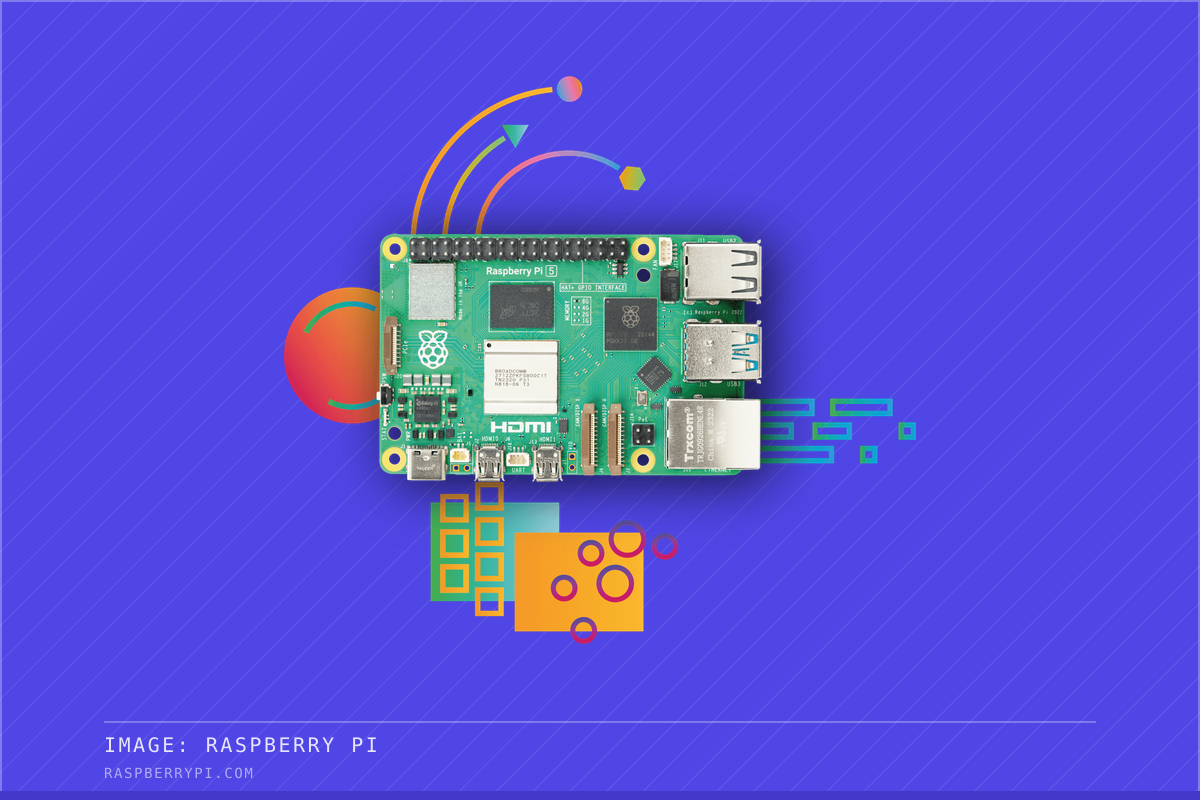
Raspberry Pi 5 (8GB)
| CPU | Broadcom BCM2712 (4× Arm Cortex-A76 @ 2.4GHz) |
| Graphics | VideoCore VII @ 800MHz |
| Memory | 8GB LPDDR4X-4267 (soldered) |
| Storage | microSD + PCIe 2.0 x1 (M.2 via HAT) |
| Ports | 2× micro-HDMI (4Kp60), 2× USB 3.0, 2× USB 2.0, Gigabit Ethernet, 40-pin GPIO, USB-C power, PCIe 2.0 x1 |
| Idle power | TBC |
Pros
- Best software and community support of any SBC
- PCIe slot for a fast NVMe HAT
- Now fast enough to be a light desktop
Cons
- Needs a good power supply (5V/5A) and cooling for full speed
- Board-only: add a case, storage and PSU
Specs and price checked 10 October 2026.
Where to buy Raspberry Pi 5 (8GB)
Disclosure: Raspberry Pi 5 (8GB) links are commercial and may earn us a commission once affiliate programs are live. It never changes our scores or the order we rank in. Availability and price vary by region — confirm on the store page.
Radxa Rock 5B
| CPU | Rockchip RK3588 (4× Cortex-A76 @ 2.4GHz + 4× Cortex-A55 @ 1.8GHz) |
| Graphics | Arm Mali-G610 MC4 |
| Memory | 8GB LPDDR4X (soldered; 4/8/16GB options) |
| Storage | microSD + eMMC module + M.2 2280 PCIe NVMe |
| Ports | 1× HDMI 2.1, 2× USB 3.0, 1× USB 2.0, 1× USB-C, 1× 2.5GbE, 40-pin GPIO, M.2 2280 |
| Idle power | TBC |
Pros
- Much faster than a Pi 5 on paper, with native M.2 NVMe
- 2.5GbE and an M.2 slot as standard
Cons
- Software support lags the Raspberry Pi
- Needs careful cooling and a beefy PSU
Specs and price are sample data, not yet audited — confirm against the vendor before buying.
Where to buy Radxa Rock 5B
Disclosure: Radxa Rock 5B links are commercial and may earn us a commission once affiliate programs are live. It never changes our scores or the order we rank in. Availability and price vary by region — confirm on the store page.
Orange Pi 5 Plus
| CPU | Rockchip RK3588 (4× Cortex-A76 @ 2.4GHz + 4× Cortex-A55 @ 1.8GHz) |
| Graphics | Arm Mali-G610 MP4 |
| Memory | 16GB LPDDR4/4X (soldered; 4/8/16GB options) |
| Storage | microSD + eMMC socket + M.2 2280 NVMe (PCIe 3.0 x4) |
| Ports | 2× 2.5GbE, 2× HDMI, 2× USB 3.0, 2× USB 2.0, 40-pin GPIO, M.2 2280 |
| Idle power | TBC |
Pros
- Dual 2.5GbE and a full-length M.2 slot
- More RAM headroom for containers
Cons
- Heavier than the Pi — plan cooling and power
- Same software caveats as the Orange Pi 5
Specs and price are sample data, not yet audited — confirm against the vendor before buying.
Where to buy Orange Pi 5 Plus
Disclosure: Orange Pi 5 Plus links are commercial and may earn us a commission once affiliate programs are live. It never changes our scores or the order we rank in. Availability and price vary by region — confirm on the store page.
Keep reading
Common questions
Why would I choose an alternative instead of a Raspberry Pi?
Usually for more performance or better built-in I/O. The RK3588 boards (Radxa Rock 5B, Orange Pi 5/5 Plus, Banana Pi M7) are significantly faster than a Pi 5 and often include an M.2 NVMe slot and multiple network ports. You trade that for rougher software support.
Is a Rockchip RK3588 board really faster than a Raspberry Pi 5?
On paper, yes — the RK3588 has big Cortex-A76 cores plus efficient A55 cores, a stronger GPU and native PCIe for NVMe. Real-world advantage depends on software maturity; for a well-supported, plug-and-play experience the Raspberry Pi 5 still wins.
Do these boards run the same software as a Raspberry Pi?
Mostly — they run Linux (Armbian, Debian/Ubuntu images) and much of the Pi ecosystem software works. But vendor images and documentation vary in quality, and hardware-accelerated video/GPU support is less consistent than on Raspberry Pi OS.
Which alternative is best for a small server or NAS?
A board with native M.2 NVMe and 2.5GbE — the Orange Pi 5 Plus or a Rockchip board with a full-length M.2 slot — is the best fit. Add USB storage or a SATA HAT if you need more capacity. Power and cooling need more thought than on a Pi.
What about the Pine64 boards?
Pine64 paused Linux hardware production during the memory/eMMC shortage, so availability is poor and there is no reliable purchase path right now. We focus on boards you can actually buy.